


Muslim World League
Muslim World League (MWL) is an international, Islamic, non-governmental organization established on May 18, 1962, following a resolution adopted during a meeting of the World Muslim Congress. The League is headquartered in the Holy City of Mecca, serving as a renowned charitable foundation in Saudi Arabia. MWL aims to highlight the tolerant principles of Islam, provide humanitarian aid, extend bridges of dialogue and cooperation with cultures and civilizations, and follow the path of centrism and moderation to realize the core message of Islam and ward off movements calling for extremism, violence and exclusion towards a world characterized by peace, justice, and coexistence.
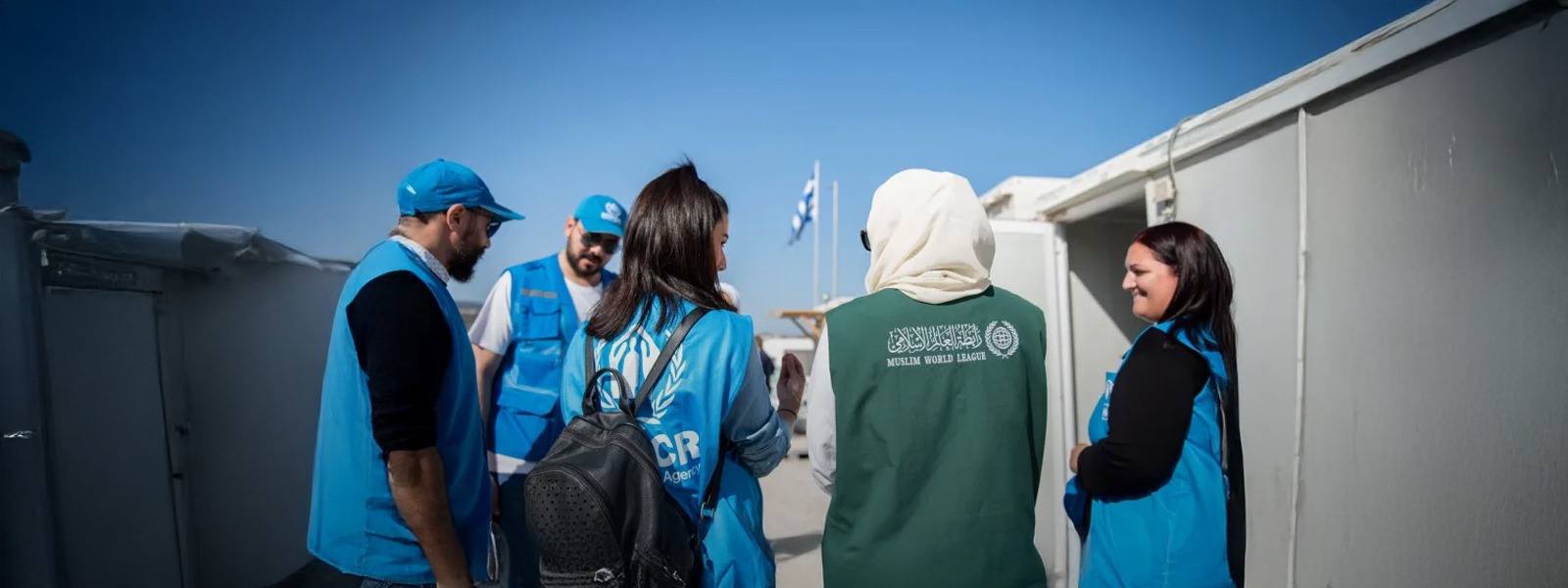
MWL agreed to join efforts with UNHCR having signed a multiyear General Corporation Agreement for2020-2021, with the first contribution in 2020 to support Youth and Children as part of the Live, Learn, and Participate Project in Sudan and Ethiopia. And a second contribution in 2021 to support activities that are part of the Child Protection Interventions Project in Northeastern Nigeria.
In early 2021, MWL’s Islamic Fiqh Council responded to UNHCR’s request and provided a fatwa endorsing UNHCR’s Refugee Zakat Fund as a legitimate mechanism for Zakat collection and distribution, which strengthened the list (now extensive) of endorsements received. On Q4 of the same year, MWL hosted at their pavilion in EXPO 2020 Dubai, the launch of UNHCR’s 2021 mid-year Islamic Philanthropy report. His Excellency Sheikh Dr. Mohammad Al-Issa, Secretary General of MWL, also co-wrote the foreword of the report. The launch event was covered in traditional and social media.
Believing in UNHCR’s mission, MWL renewed its commitment for five years (2022-2026) with a USD 5 million commitment and pledged funds during the Global Refugee Forum. This commitment aims to improve the lives of refugees and host communities by ensuring food security, promoting economic and social inclusion, creating livelihood opportunities, fostering public-private partnerships, and involving refugees in community programs.
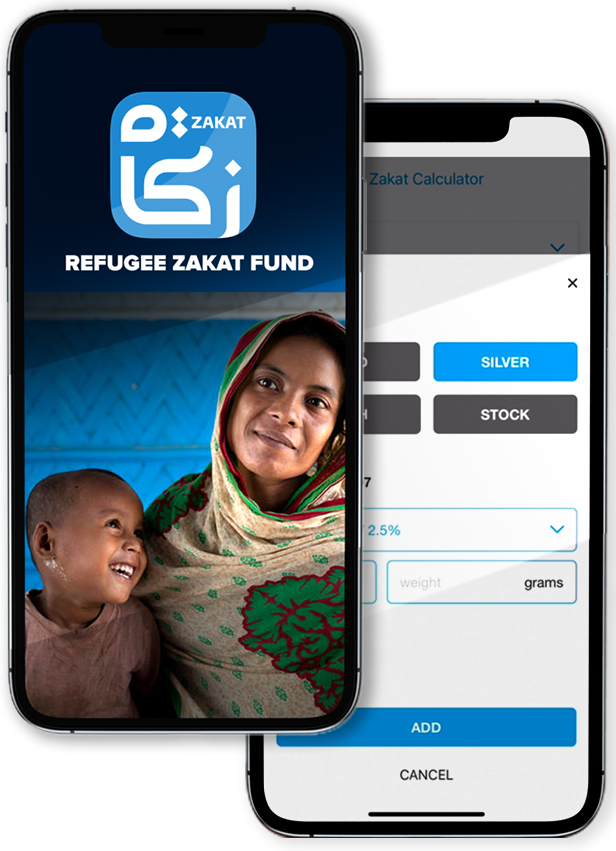
You can also donate your Zakat or Sadaqah through “Refugee Zakat Fund” App.
Download “Refugee Zakat Fund” App now on your mobile to send your Zakat and Sadaqah donations to the most vulnerable refugee and internally displaced families.
Download Now